
Markets never stand still. Prices shift in moments, news travels instantly, and trading decisions often have to be made under pressure. In such an environment, the tools a trader relies on can either make the journey smoother or add more complexity.
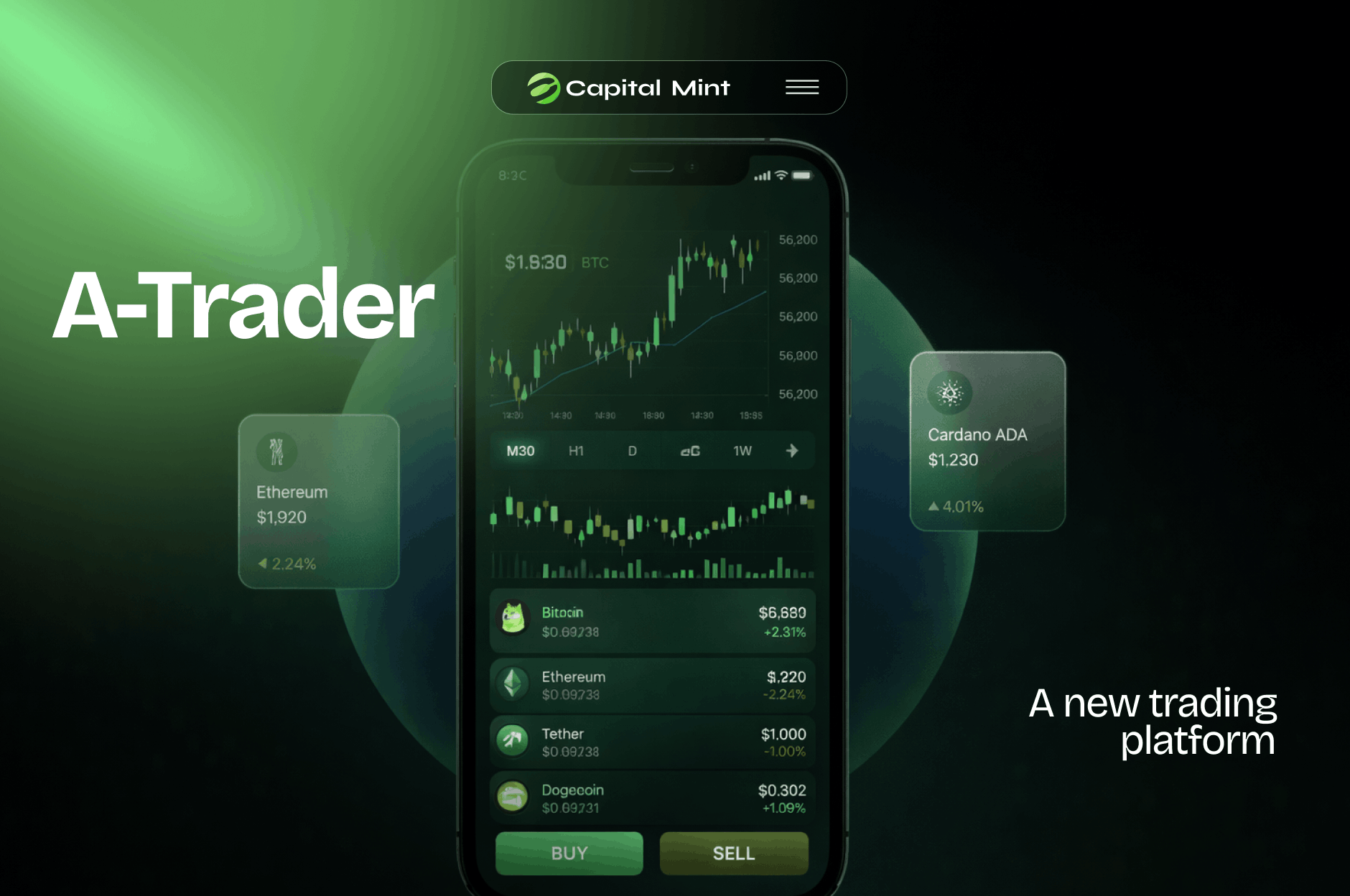
The A-Trader platform was designed around one core belief that trading works better when every step of the decision process lives inside a single connected system. Instead of forcing traders to jump between separate tools for analysis, execution, performance review, and behaviour tracking, A-Trader brings everything together into one continuous workflow.
For you, we have gathered how that structured approach functions, why it’s important for real trading performance, and how it is influencing the way serious traders interact with the market.
Execution Tools vs. Decision Systems
Most traditional platforms are built with one primary objective, that is to execute orders efficiently. They focus on speed, charting, and order placement. While these features are essential, they only address one moment in a much larger process.
Professional trading involves four ongoing activities:
- Market observation
- Decision execution
- Performance evaluation
- Behavioral management
When these components are disconnected, traders often experience:
- Fragmented workflows
- Manual data tracking
- Inconsistent risk application
- Repeated behavioral mistakes
The difference between an execution tool and a structured trading process lies in integration. A-Trader positions itself not as a standalone charting tool, but as an integrated trading system designed to support the entire lifecycle of a trade.
A Closed-Loop Trading Framework
The A-Trader platform is built around a closed-loop workflow. Trades are not treated as separate, one-time actions. Instead, every step feeds information back into the next, creating an ongoing cycle of learning and improvement.
In simple terms, the process follows this path:
Market Context → Controlled Execution → Performance Review → Behavioural Awareness → Better Market Understanding
This approach shifts trading from impulsive reactions to a more steady, repeatable practice. Each trade becomes part of a larger learning pattern rather than an isolated decision.
Stage 1: Market Context and Intelligent Scanning
Before any order is placed, A-Trader must determine where attention should be directed. Random chart switching or impulse-based entries often stem from a lack of structured scanning.
A-Trader’s scanning layer focuses on surfacing meaningful market shifts rather than generating noise. The objective is not to dictate trades, but to highlight areas worth evaluating.
Effective scanning typically helps traders:
- Identify emerging volatility shifts
- Detect structural changes in trend or momentum
- Narrow focus to high-relevance instruments
- Avoid overtrading low-probability setups
The emphasis here is contextual awareness. Instead of jumping directly into execution, traders first establish environmental clarity. This reduces impulsive entries and increases alignment between strategy and market conditions.
In this framework, scanning is meant to answer one important question, where should a trader focus attention at this moment?
Stage 2: Structured and Controlled Execution
Execution is where small inconsistencies become measurable losses. Under pressure, traders may miscalculate position size, deviate from planned risk parameters, or enter without confirming structure.
The A-Trader platform integrates risk logic directly into the execution interface. This design reduces reliance on mental calculations or external tools.
A structured execution environment typically supports:
- Pre-defined risk parameters
- Consistent position sizing logic
- Clear order structuring
- Reduced on-screen clutter
This approach lowers cognitive load at the moment decisions are made. It does not eliminate risk, since no platform can, but it minimizes preventable errors caused by stress or rushed judgment.
Stage 3: Performance Analytics and Data-Driven Review
Many traders review performance irregularly or rely on basic metrics such as win rate. However, professional-level improvement requires deeper insight.
The A-Trader platform treats closed trades as data points rather than finished events. Built-in trading performance analytics provide structured feedback on behavior and outcomes.
Effective review systems typically analyze:
- Average reward-to-risk ratios
- Holding duration patterns
- Session-based performance differences
- Strategy-specific metrics
- Consistency across time periods
Reviewing trades turns market activity into useful feedback that traders can act on. It helps reveal repeating behaviour, shows what is working well, and points out areas that need improvement over time.
Without a clear review system, traders often depend on memory and personal judgment when evaluating performance. Data replaces guesswork by showing the real results behind every decision. It makes strengths easier to repeat and mistakes easier to correct.
Stage 4: Behavioral Monitoring and Trading Psychology Tools
Performance deterioration rarely appears suddenly. It often begins subtly with slightly larger position sizes, slightly earlier entries, or slightly delayed exits.
Behavioral analysis helps detect these micro-shifts before they compound into larger problems.
A-Trader integrates trading psychology tools that surface execution behavior changes over time. Rather than framing psychology as emotional judgment, it presents behavioral awareness as part of risk management.
Behavioral tracking can help identify:
- Deviations from normal risk parameters
- Increased trading frequency during drawdowns
- Overextension during winning streaks
- Fatigue-driven decision shifts
Trading psychology here is not treated as something vague or theoretical. Instead, it becomes a measurable part of the trading workflow. Changes in behaviour are tracked the same way as market data.
When traders can see clear evidence of shifting discipline, they are able to spot problems sooner and make adjustments before small issues grow into bigger ones.
Why Integration Outperforms Tool Fragmentation
The value of a unified system becomes clearer when looking at the alternative. When workflows are fragmented, traders often depend on multiple separate tools. Opportunity scanning may happen on one platform, order placement on another, and performance tracking may be done manually in spreadsheets. Behaviour notes may also be recorded separately.
This setup creates more friction in the trading process. Data has to be moved from one tool to another, insights must be interpreted across different interfaces, and overall consistency depends mostly on personal discipline rather than built-in workflow support.
An integrated system like A-Trader removes much of this effort. Performance analytics are generated automatically, and risk management tools are built directly into the execution interface instead of requiring external calculations.
Instead of isolated journaling, behavioral insights are embedded within the workflow. Rather than operating through disconnected stages, the entire process functions as a closed-loop system.
The Performance Compounding Effect
Structure grows stronger when it is used day after day.
Now imagine two traders following the same strategy. One switches between different tools and depends largely on memory when making decisions. The other works inside a connected workflow where every trade is automatically recorded and reviewed within the system.
With time, the trader using the structured platform starts spotting weak points more quickly. Simple errors happen less often, risk exposure stays better controlled, and shifts in trading behaviour are easier to notice before they grow into larger problems.
Who Benefits Most from the A-Trader Platform?
While beginners can benefit from structured systems, the platform is particularly valuable for:
- Active intraday traders managing multiple positions
- Prop traders required to maintain strict risk discipline
- Strategy-based traders seeking measurable performance data
- Traders transitioning from discretionary to rule-based systems
Those who treat trading as performance optimization rather than casual speculation will likely extract the most value from a workflow-centered platform.
The Final Words
Markets tend to reward clear thinking, steady action, and careful risk control. No platform can promise success, but the environment where trading decisions are made has a strong influence on long-term results.
The A-Trader platform moves away from scattered trading tools and brings decision-making into one connected system. It combines market context analysis, controlled order execution, performance tracking, and behaviour awareness in a single workflow. The design supports traders who focus on process and discipline rather than acting on sudden market urges.
And since the competition in the market is drastically growing, small advantages are very important. Fewer execution mistakes, faster feedback, and stronger trading discipline create improvement over time. Structure helps build these advantages.
Remember, good technology does not replace trading skills. But the right trading structure allows skill and experience to grow and produce better results over time.